
Breaking Down Complexity: VR Training for Aviation Safety
How immersive learning transformed technical instruction into engaging, effective training.
Introduction
In aviation, safety is paramount. From ground staff to flight crews, every role requires rigorous training across technical systems and emergency protocols. Traditional training methods—posters, actors, swimming pools, and simulators—are costly, time-intensive, and often fall short of replicating real-world conditions.
Recognizing the aviation industry’s long history with simulation training, our designer set out to create a new kind of instructional experience: a VR training program that breaks down the complexity of a plane engine into an engaging, interactive learning journey.
The Challenge
Aviation teams face significant hurdles when it comes to training:
Logistical challenges: Hiring actors, renting pools, and building specialized facilities take valuable time and resources.
Limitations of traditional methods: Diagrams on posters and static instruction delay trainees’ ability to operate real controls.
Safety concerns: Replicating dangerous conditions, like on-board fires, is difficult, leaving crew unprepared for real-world emergencies.
Our goal was to show how VR could overcome these barriers—making learning safer, more efficient, and more engaging.
Our Approach
Our designer knew two things going in: they wanted to build an instructional VR experience, and they wanted to push the boundaries of Shapes XR’s new animation features.
The process began with high-quality 3D jet engine models sourced from a maker site. Using Blender, the models were optimized for VR by reducing polycount and assigning distinct colors for clarity. Once prepared, the parts were imported into Shapes XR and reassembled into a virtual engine.
From there, animation became the key to turning complexity into clarity:
Part One: Users explore the engine’s components, enhanced with fade-in animations, transparency effects, and airflow visualizations.
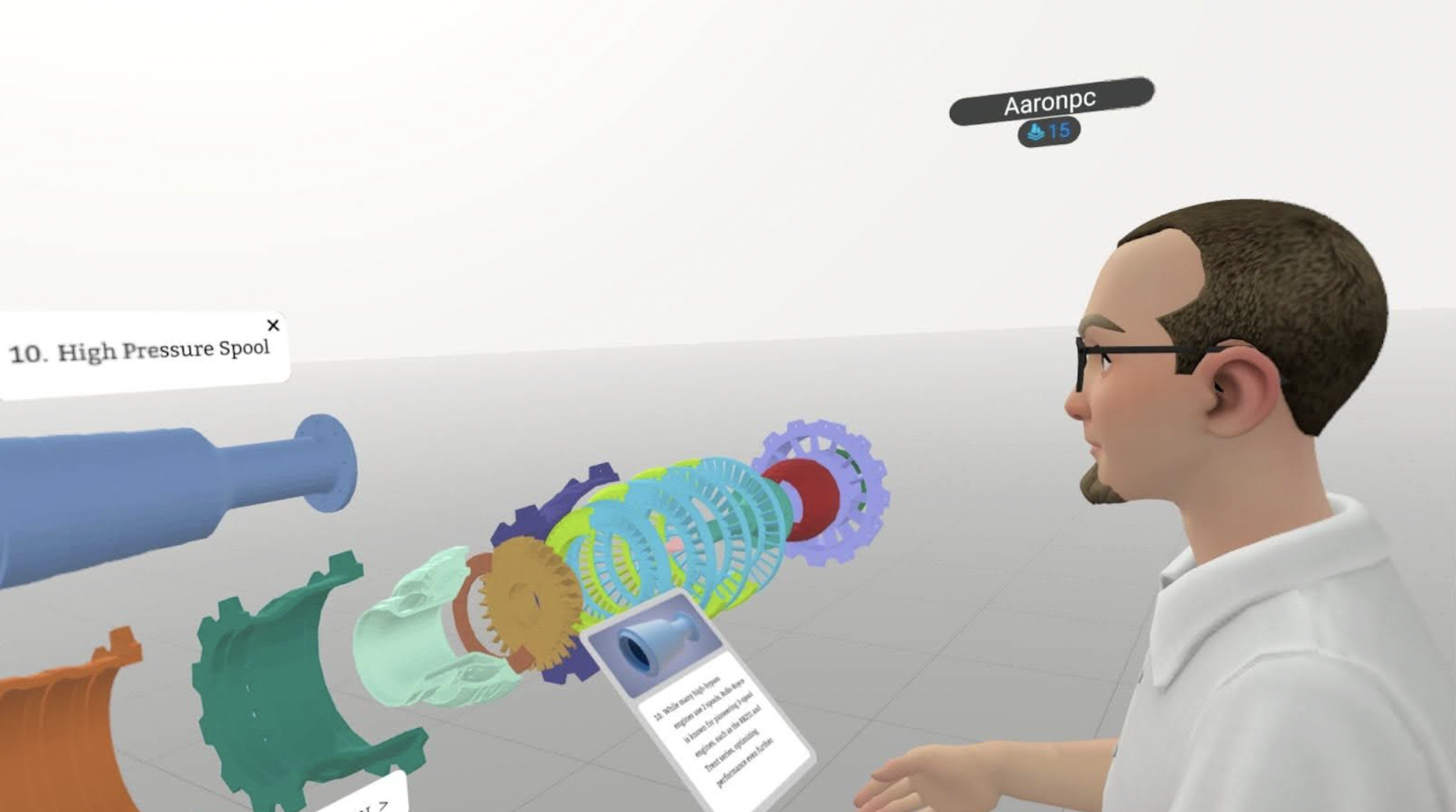
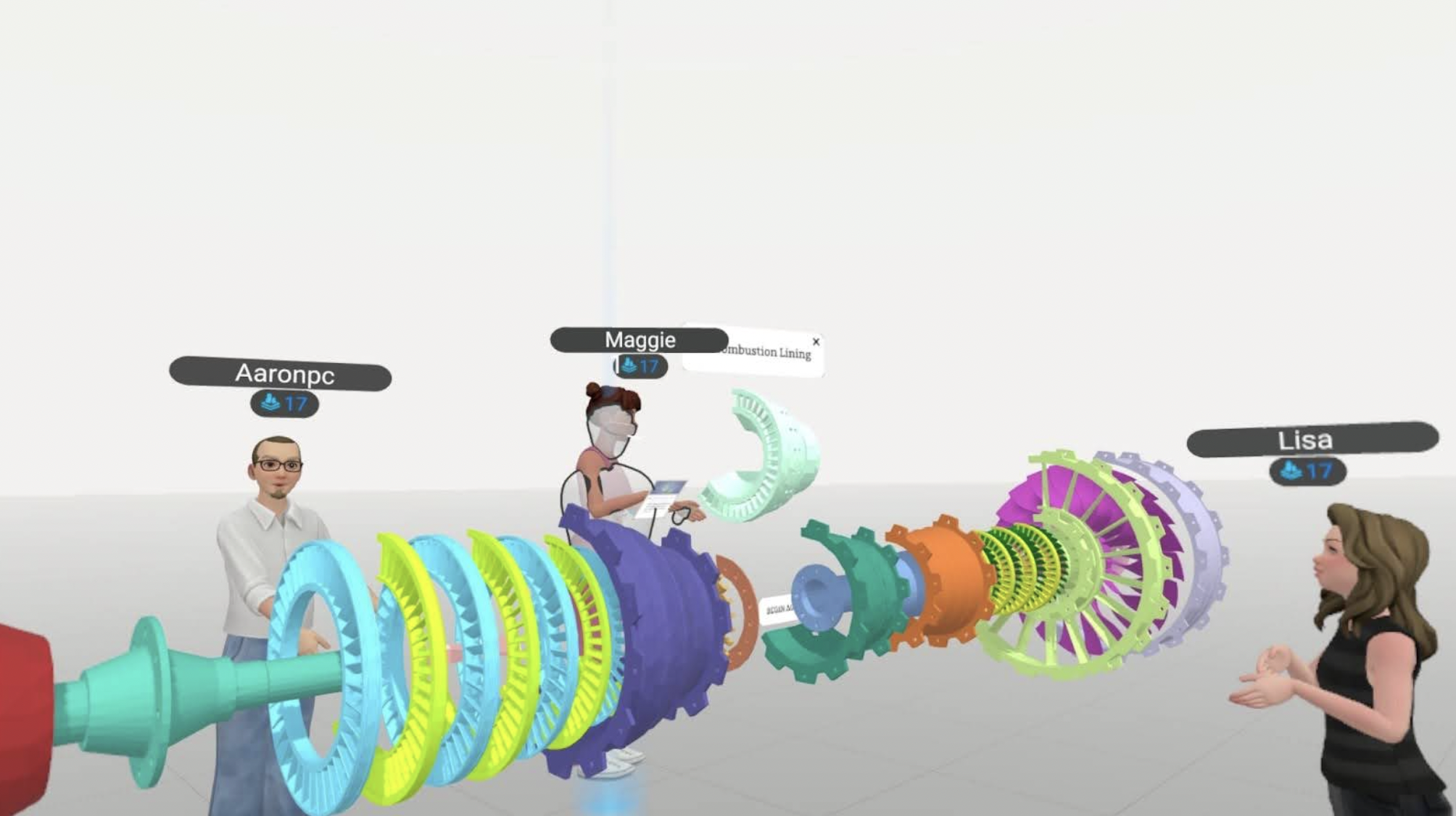
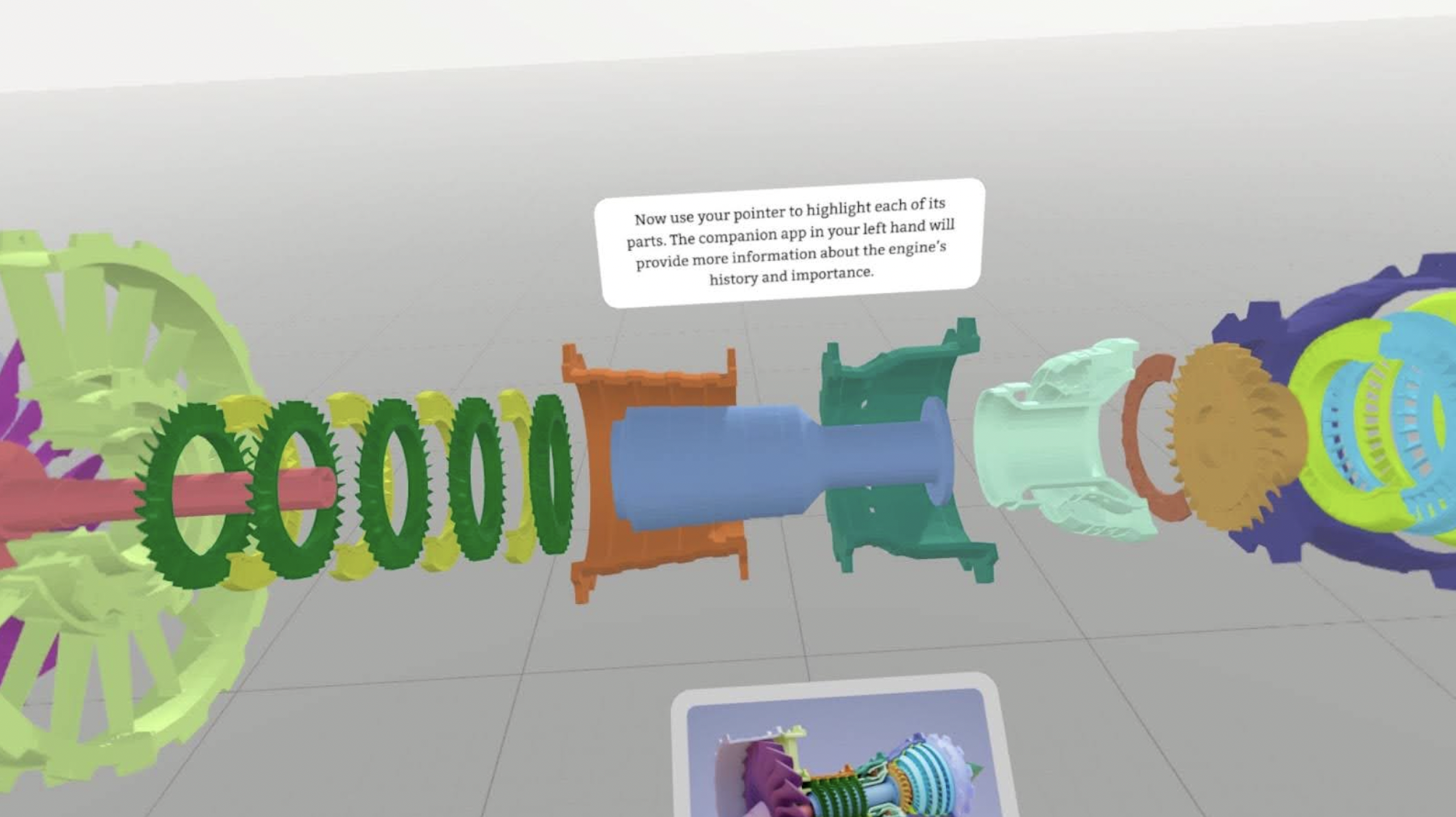
Part Two: The engine explodes into a clean, animated splay of parts, each selectable for deeper exploration. A virtual tablet in the user’s off hand provides detailed information, turning the experience into an interactive learning tool.
Behind the scenes, this required dozens of carefully organized scenes and linked animations—a technical challenge that ultimately created a seamless user experience.
The Impact
The final result was more than a visual demo; it was a proof of concept for the future of aviation training. By blending interactivity with animation, the VR experience made technical systems more approachable, digestible, and engaging.
From airlines to aerospace manufacturers, the implications of this demo are significant:
Safer Training: Crews can rehearse fire safety, evacuation, and technical instruction without real-world risks.
Reduced Costs: Virtual environments minimize reliance on costly facilities and equipment.
Faster Learning: Interactive modules help trainees understand complex systems before stepping into simulators.
Better Outcomes: Personalized, repeatable, and immersive learning builds confidence and competence across all roles.
Early adopters like KLM have already seen measurable results, with up to 40–50% of planes and equipment recreated in mixed reality, saving both time and money on training while improving outcomes.
What’s Next
With this project, we’ve demonstrated how VR can transform technical instruction into a truly immersive learning experience. Looking forward, the next evolution will be multi-user environments—where entire crews can train together, practicing communication and coordination in lifelike scenarios.
Because in aviation, safety can’t just be taught—it has to be experienced.
Ready to Build What’s Next—Together?
At Quantious, we use immersive VR to help teams collaborate earlier, think bigger, and bring event experiences to life before they’re built. From internal moments to brand activations, we turn planning into a creative, shared experience that pushes storytelling forward and inspires what’s possible.